https://www.sciencedirect.com/science/article/abs/pii/S0013935124019844?utm_source=chatgpt.com
Hydrodynamic cavitation and ozone nanobubble-coupled hydrodynamic cavitation
have demonstrated effective algae control in laboratories, but their in-situ potential,
especially impact on nutrient salt degradation and microbial communities remain
unclear. This study applied two-stage nanobubble technology, combining hydrodynamic
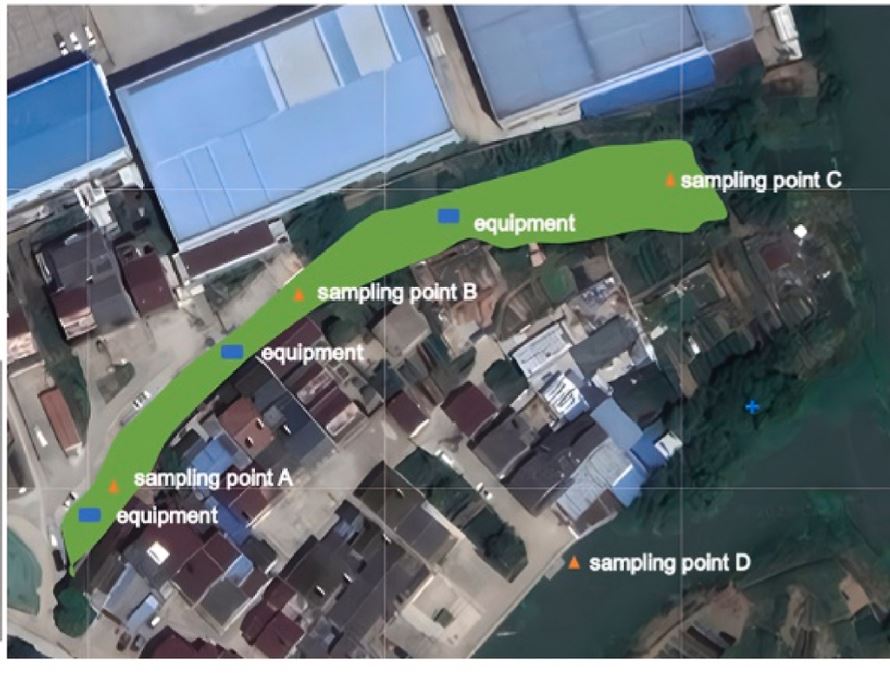
cavitation and ozone nanobubbles, in a 3300 m2 semi-enclosed area of Taihu Lake to
address these gaps. Results show that the technology efficiently controls algae, reduces
odors, improves anaerobic conditions, and lowers ammonia nitrogen. Over 20 days,
chlorophyll-a concentration reduced by 77.46% and cyanobacterial phycocyanin by
89.47%. Additionally, the concentrations of 2-MIB, GSM, and DMTS fell below threshold
values. Notably, the relative abundance of Cyanobacteria in sediment dropped from
8.53% in the control area to only 1.59%–3.65% in the experimental area. The technology
also achieved a significant reduction in ammonia nitrogen, with removal efficiencies of
78.53% in the water column and 39.17% in sediments, though the removal of total phosphorus
was limited. Furthermore, the two-stage nanobubble system enhanced the abundance of
nitrogen-cycling microorganisms and genes in the water, while promoting nitrogen- and
phosphorus-related microbial communities in sediments and inhibiting the
cyanobacteria-associated genus Cyanobium PCC-6307. Thus, Two-stage nanobubble
technology can be employed for in-situ algal control in aquatic ecosystems.
.png)
.png)