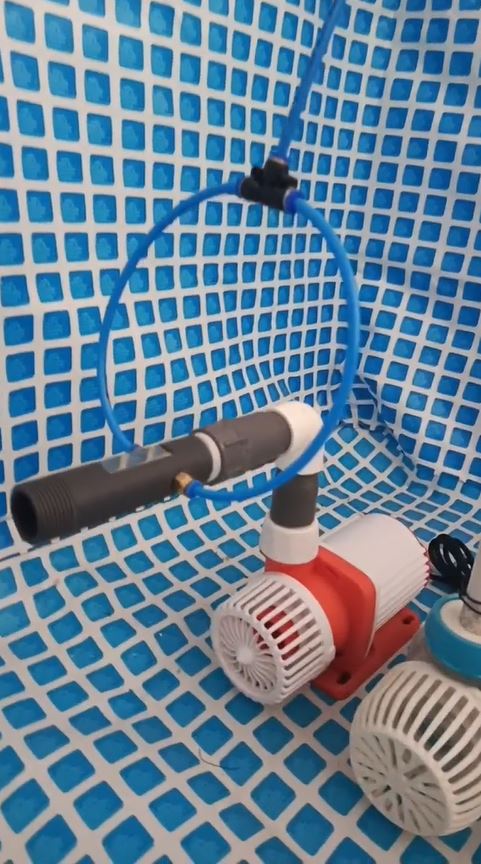
Combination of oxygen nanobubbles (using pure oxygen) and a protein skimmer (foam fractionator) can significantly improve water quality, dissolved oxygen stability, and survival of baby lobsters (phyllosoma, puerulus, or juvenile stages). These early life stages are highly sensitive to low oxygen, organic pollution, and microbial outbreaks, making this combination particularly valuable in hatcheries and intensive recirculating aquaculture systems (RAS).
1. Stable High Dissolved Oxygen (DO)
Oxygen nanobubbles provide several advantages over conventional aeration:
* Maintain DO close to saturation (90–120%) with much lower oxygen loss.
* Nanobubbles remain suspended in water for extended periods, providing a continuous oxygen reservoir.
* Eliminate localized oxygen depletion around shelters and tank bottoms.
* Improve oxygen availability during feeding when oxygen demand rapidly increases.
* Reduce stress caused by daily fluctuations in oxygen concentration.
Benefits for baby lobsters
* Higher survival rate
* Faster molting
* Better appetite
* Improved activity and swimming behavior
* Reduced physiological stress
2. Improved Water Clarity
Protein skimmers continuously remove:
* Dissolved organic compounds (DOC)
* Proteins
* Lipids
* Fine suspended particles
* Waste released from uneaten feed
* Organic mucus
This results in:
* Crystal-clear water
* Better light penetration
* Cleaner tank surfaces
* Less organic accumulation
Clear water is especially important because baby lobsters are sensitive to deteriorating water quality.
3. Reduction of Harmful Bacteria
Neither technology is a sterilizer by itself, but together they help suppress microbial growth.
Protein skimmer removes:
* Organic nutrients that bacteria utilize
* Bacteria attached to organic particles
* Biofilm fragments
Oxygen nanobubbles:
* Improve oxidation conditions
* Support beneficial aerobic bacteria
* Reduce anaerobic zones where harmful microbes proliferate
Possible reductions include:
* Vibrio spp.
* Opportunistic heterotrophic bacteria
* Fouling microorganisms
4. Lower Ammonia and Nitrite Stress
Healthy nitrifying bacteria require:
* High dissolved oxygen
* Stable water quality
Nanobubbles improve biofilter efficiency by supplying abundant oxygen, while protein skimmers reduce the organic load entering the biofilter.
Results include:
* Faster ammonia oxidation
* Lower nitrite accumulation
* Improved nitrogen cycling
* More stable water chemistry
5. Better Molting Success
Molting is the most critical period for juvenile lobsters.
High oxygen availability helps:
* Energy production
* New exoskeleton formation
* Calcium deposition
* Recovery after molt
Cleaner water from protein skimming reduces infection risk immediately after molting, when the exoskeleton is still soft.
Expected outcomes:
* Higher molting success
* Reduced deformities
* Lower mortality during molts
6. Reduced Organic Waste
Protein skimmers efficiently remove:
* Fine feed particles
* Feces
* Dissolved proteins
* Surface-active compounds
This leads to:
* Lower Biological Oxygen Demand (BOD)
* Lower Chemical Oxygen Demand (COD)
* Reduced water discoloration
* Less frequent water exchange
7. Improved Biosecurity
A cleaner culture environment lowers disease pressure by:
* Removing potential pathogen carriers attached to suspended particles
* Reducing organic substrates that favor pathogen growth
* Maintaining stable oxygen levels that strengthen lobster immune responses
Although additional disinfection (e.g., UV or ozone) may still be required in hatcheries, these technologies contribute significantly to preventive biosecurity.
8. Enhanced Feed Utilization
Lobsters maintained in well-oxygenated, clean water generally exhibit:
* Stronger feeding responses
* Better digestion
* Higher feed conversion efficiency
* Reduced feed wastage
Cleaner water also helps preserve the nutritional quality of live and formulated feeds.
9. Greater Stocking Density Potential
The combined system supports higher biomass by:
* Maintaining high oxygen availability
* Removing dissolved and particulate wastes
* Reducing oxygen demand from decomposing organics
* Improving overall water quality stability
This enables hatcheries to increase production while maintaining animal welfare.
10. Improved Performance in Recirculating Aquaculture Systems (RAS)
The combination is particularly effective in RAS because it:
* Lowers organic loading on biofilters
* Increases oxygen availability throughout the system
* Improves water transparency
* Reduces maintenance requirements
* Stabilizes overall water quality
Overall, the combination of oxygen nanobubbles (pure O₂) and protein skimming is especially well suited for spiny lobster (Panulirus spp.) hatcheries and juvenile nursery systems, where maintaining consistently high water quality is essential for maximizing survival, growth, and successful molting.