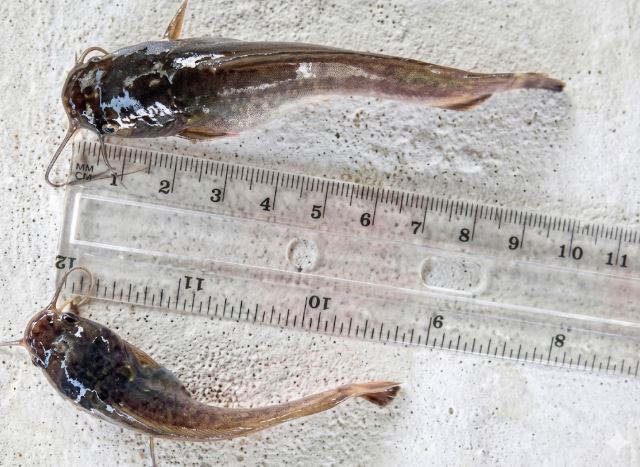
Growth and Survival improved by Microbubble for Catfish fingerlings in Biofloc model
Abstract:
Catfish (Clarias sp.) is one of the economically important freshwater fish
that has been widely cultivated both traditionally and intensively. Catfish
has many advantages such as fast growth, resistance to disease, and
can live in water conditions that are low in oxygen content. The use of
microbubble technology is expected to support the performance of catfish
farming with a biofloc system. With the application of this technology, it is
hoped that the oxygen supply from micro-sized air bubbles will increase.
Because the diameter of the air bubble is less than 50 μm, it is expected to
last a long time in the water and can spread horizontally so that it can be
utilized optimally by catfish and biofloc. The purpose of this study was to
evaluate the effectiveness of microbubble technology on the growth performance
of catfish. The research method used a completely randomized design, with
4 treatments and 3 replications. The variables measured during the study
included survival rate, length and weight growth, specific growth rate, feed
conversion ratio (FCR), and water quality including temperature, dissolved
oxygen (DO), pH, ammonia (NH 3 ), nitrite (NO 2- ), nitrate (NO 3- ), oxygen
consumption rate (OCR), and total organic matter (TOM).
Conclusion
The application of microbubble in catfish farming shows significant
growth results compared to without aeration and the use of conventional aeration.
In addition, the survival rate of catfish farming using microbubble also showed
significant results. However, the feed conversion ratio parameter does not show a
significant difference. The water quality during the study using microbubble aeration
was also included in the good range for the life and growth of catfish.