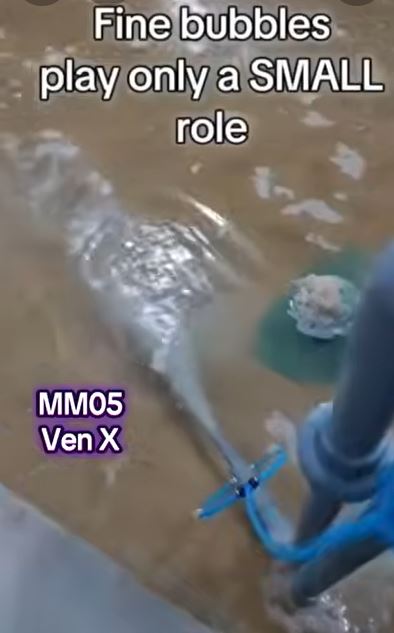
https://www.youtube.com/shorts/d21UuCuiemI
In indoor farming ponds for Babylon snails (Babylonia areolata, or Ốc hương), managing
the sand layer is the most critical factor for success. While Babylon snails spend a significant
amount of time burrowed in the sand, this layer naturally acts as a trap for leftover feed
(typically fresh trash fish or shrimp meat) and feces, rapidly turning the substrate anaerobic (oxygen-depleted).
Integrating fine bubbles (micro-nano bubbles) provides massive advantages specifically
tailored to solving this sand-layer vulnerability while maximizing growth rates in a controlled indoor environment.
Because Babylon snails bury themselves to rest and digest, the water quality inside the sand gaps
matters just as much as the water above it.
The Problem: Standard aeration bubbles are large; they rise quickly to the surface and only oxygenate
the upper water column. The sand layer remains stagnant, leading to the growth of anaerobic bacteria that produce
highly toxic Hydrogen Sulfide (H2S) and Ammonia (NH3). This causes "black sand" and forces snails to surface, stop feeding, or die.
The Fine Bubble Solution: Micro-nano bubbles possess an extremely slow rising velocity and a
negative surface charge. Instead of rushing to the surface, they float horizontally, drift throughout the pond,
and can physically penetrate the interstitial spaces (gaps) of the sand layer. Keeping the sand matrix aerobic
suppresses H2S production entirely and allows beneficial nitrifying bacteria to thrive right where the waste accumulates.
Indoor intensive ponds run a high risk of organic overloading due to the fresh, high-protein diets required by Babylon snails.
Radical Generation: As micro-nano bubbles collapse under water pressure, they naturally generate trace amounts of
hydroxyl radicals (-OH). This provides a mild, safe, and continuous advanced oxidation process.
Accelerated Decomposition: These radicals, combined with ultra-high dissolved oxygen (DO) levels, break down
complex organic matter (sludge, slime, and uneaten feed proteins embedded in the sand) into simpler compounds.
This makes it far easier for the mechanical filtration or Recirculating Aquaculture System (RAS) to flush the waste out,
reducing the frequency of aggressive sand-washing cycles.
Babylon snails are highly sensitive to fluctuating DO levels. When oxygen drops, their metabolic rate plummets.
Stable Hyper-Oxygenation: Fine bubbles maximize the gas-liquid contact area, easily pushing and maintaining
DO levels at or above saturation (over 7-8 mg/L) even at high stocking densities.
Improved Feed Conversion: In a highly oxygenated environment, the snails' respiration is effortless.
This energy efficiency translates directly into better feed digestion, faster weight gain, and shorter culture cycles to reach market size.
Warm, indoor environments with organic-rich sand are breeding grounds for pathogenic bacteria, particularly
Vibrio species, which cause mass mortality and shell disease in Babylon snails.
By deeply oxygenating both the water and the sand substrate, fine bubbles create an ideal environment
for obligate aerobic bacteria (like Bacillus and nitrifiers).
These beneficial microbes rapidly outcompete facultative anaerobic pathogens like Vibrio for space and
nutrients, dramatically lowering the pathogen load without requiring antibiotics or harsh chemicals.