https://www.sciencedirect.com/science/article/abs/pii/S2214714424019081?dgcid=author
The plasma activated nanobubble water exhibited enhanced antibiofilm activity
compared to nanobubble water
Incorporating argon reduced reactive species concentrations in
plasma-activated nanobubble water
The reactive species in plasma activated nanobubble water
decreased during storage
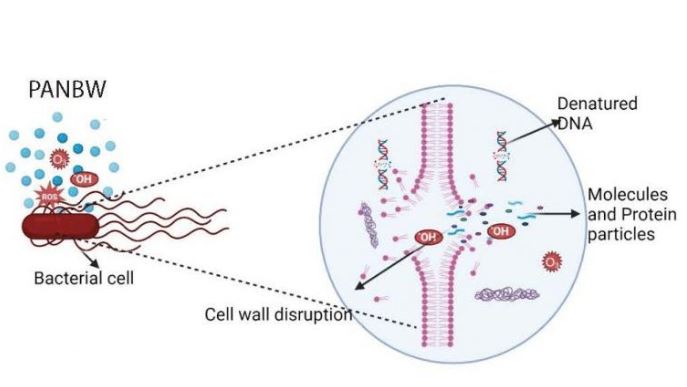
This research developed novel plasma activated nanobubble water (PANBW) by
integrating atmospheric cold plasma and nanobubble water (NBW) technologies.
Mixing of plasma reactive species with NBW to generate the PANBW makes it an
effective solution for microbial biofilm inactivation and water treatment, possibly by
leveraging the benefits of both technologies. Selected properties of PANBW, including
the concentrations of reactive oxygen and nitrogen species (RONS) were characterized,
and the stability of RONS during storage for 7 days were evaluated. The combination of
argon and air as feed gases was used to determine the influence of feed gas type on
RONS production and the effect of the generated PANBW on biofilm reduction.
The effectiveness of PANBW in inactivating mixed-species bacterial biofilms was
assessed against NBW, plasma activated water (PAW), and their combinations.
This comparison involved treating biofilms of Salmonella enterica Typhimurium ATCC
13311 and Aeromonas australiensis, that were grown on stainless steel coupons by
these solutions. The PANBW treatment was most effective in the inactivation of the
tested mixed species biofilms with a reduction of >2 log CFU/cm2 in the biofilm population.
The confocal laser scanning microscopy analysis was consistent with the bacterial
inactivation results. This study highlights the potential of atmospheric cold plasma
when combined with nanobubble technology, as a novel and efficient method for biofilm
control and food safety applications.
.png)
.png)