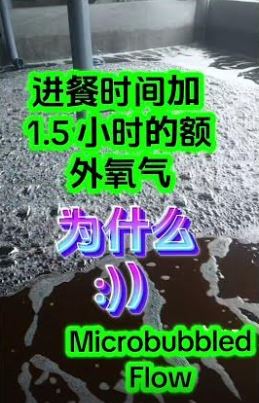
1. Additional oxygenation during feeding
Fish oxygen consumption increases around feeding because of increased activity and digestion. Fine bubbles can help by:
*Increasing gas–water contact area: Smaller bubbles provide much greater surface area than coarse bubbles, improving O₂ transfer.
* Maintaining higher DO near the fish: Fine bubbles can be distributed through the water column, reducing localized low-oxygen zones.
* Supporting high feeding rates: In high-density systems, the extra oxygen-transfer capacity can help compensate for temporary increases in oxygen demand.
* Improving oxygen distribution: If bubble injection is positioned strategically, it can help circulate oxygenated water throughout the tank.
* Reducing oxygen depletion from organic waste: Uneaten feed and feces increase biological oxygen demand; rapid removal plus supplemental oxygenation helps protect DO.
A key point is that fine bubbles should supplement—not replace—the main oxygenation system when fish biomass and feeding rates are high.
2. Circular flow after feeding to gather feces
A circular/rotational flow can be designed so that fish remain in the main swimming zone while heavier particles gradually move toward a central drain or collection point.
A useful arrangement is:
Fine-bubble injection + tangential water inlet → circular flow → solids move toward collection zone → central drain/solids separator
The fine-bubble system can contribute by:
* Creating additional vertical mixing
* Helping maintain a consistent circulation pattern.
* Keeping very small particles suspended long enough for the hydraulic flow to transport them.
* Preventing feces from settling randomly around the tank bottom.
* Directing suspended solids toward a central drain, side drain, or solids-collection chamber, depending on tank geometry.
However, there is an important distinction: bubbles themselves should not be relied upon to push feces to the drain.Excessive bubbling can actually keep feces suspended throughout the tank. The main solids-transport mechanism should be controlled hydraulic circulation, with fine bubbles providing oxygenation and supporting mixing.
Tags: