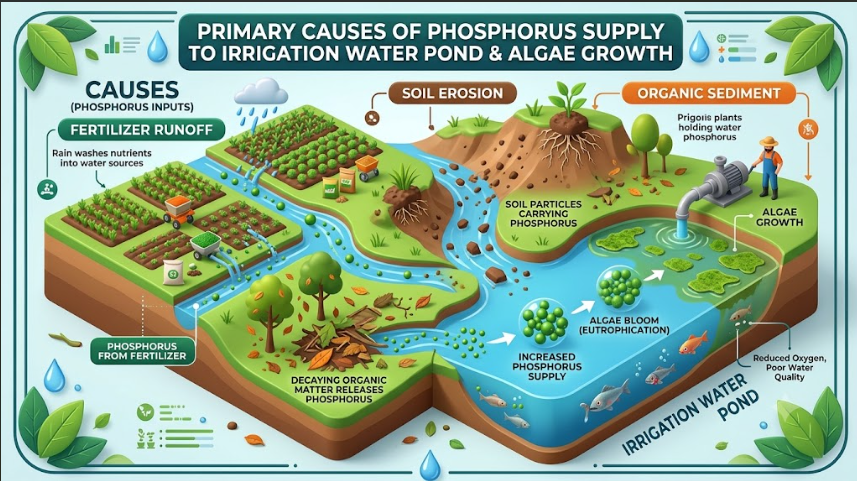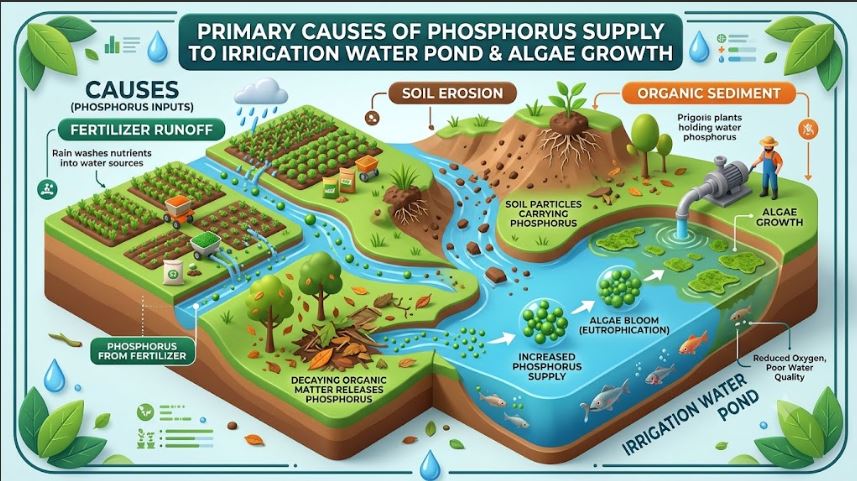
Algae growth in a pond is driven by the following chain:
Nutrients + sunlight + warm/stagnant water → rapid algae growth → algae bloom → nighttime oxygen depletion + pH swings + possible toxins/odour
Algae crash at night can make the bottom sediment oxygen-depleted, phosphorus that was previously bound to iron can become soluble and move back into the water. This creates an internal nutrient source that can sustain repeated blooms even after the external nutrient source is reduced
| Cause | Typical source | Effect |
|---|---|---|
| Phosphorus | Fertilizer runoff, soil erosion, organic sediment | Often the most important driver of freshwater eutrophication |
| Nitrogen | Fertilizer, manure, irrigation return water | Promotes algae and cyanobacteria |
| Organic matter | Leaves, grass, sludge, dead algae | Feeds microbial activity and recycles nutrients |
| Sunlight | Shallow, open pond | Strong photosynthesis |
| Warm water | Summer/high solar radiation | Accelerates algal growth |
| Stagnation | Poor circulation, little wind | Allows algae to accumulate at surface |
| Sediment nutrient release | Anaerobic bottom mud | Phosphorus can return from sediment to water |
| Irrigation return water | Drainage from fertilized fields/greenhouses | Reintroduces N and P |