Eutrophication in lakes, rivers and soil ponds can be visually recognized through algae bloom.
Algae blooms in lakes, rivers, and recreational soil ponds are typically triggered by a combination of excess nutrients, favorable environmental conditions, and ecological imbalances. When these factors align, algae (particularly cyanobacteria or "blue-green algae") multiply rapidly.
Primary Root Causes
a. Nutrient Loading (Eutrophication):
- Phosphorus and Nitrogen: These are the primary chemical fuels for algae. Runoff containing agricultural fertilizers, lawn fertilizers, and animal waste washes high levels of phosphorus and nitrogen into water bodies.
- Internal Recycling: In shallow recreational ponds, accumulated organic sediment (fish waste, dead plant matter, uneaten feed) releases trapped phosphorus back into the water column when oxygen levels drop.
.png)
b. Elevated Water Temperatures:
Warmer water increases metabolic and reproductive rates for algae. Higher temperatures also stratify water columns (preventing mixing), creating stable, warm surface layers where algae thrive.
c. High Sunlight and Long Daylight Hours:
Intense solar radiation provides the energy required for rapid photosynthesis. Extended daylight hours during summer months accelerate bloom formation.
.png)
d. Stagnant or Low-Flow Water:
In rivers and lakes, reduced flow rates caused by droughts, dams, or water abstraction create stagnant zones. Recreational ponds naturally lack strong currents, making them highly susceptible if aeration is insufficient.
.png)
e. Imbalanced Aquatic Ecosystems:
A shortage of herbivorous zooplankton (like Daphnia) or filter-feeding fish—often caused by overfishing or poor water quality—removes natural biological control. Without grazers to consume phytoplankton, algae populations explode unchecked.
.png)
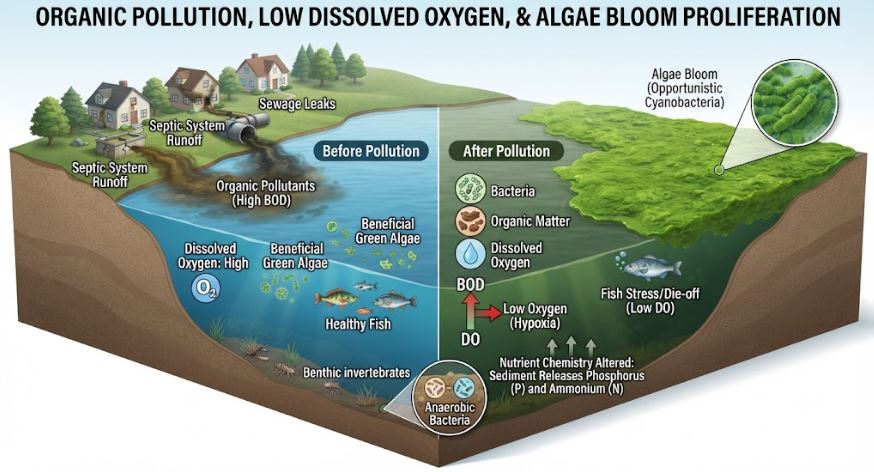
f. Organic Pollution and Low Dissolved Oxygen:
Sewage leaks, septic system runoff, or decaying organic debris increase biological oxygen demand (BOD). Low oxygen levels alter nutrient chemistry, often favoring opportunistic cyanobacteria over beneficial green algae.
.png)