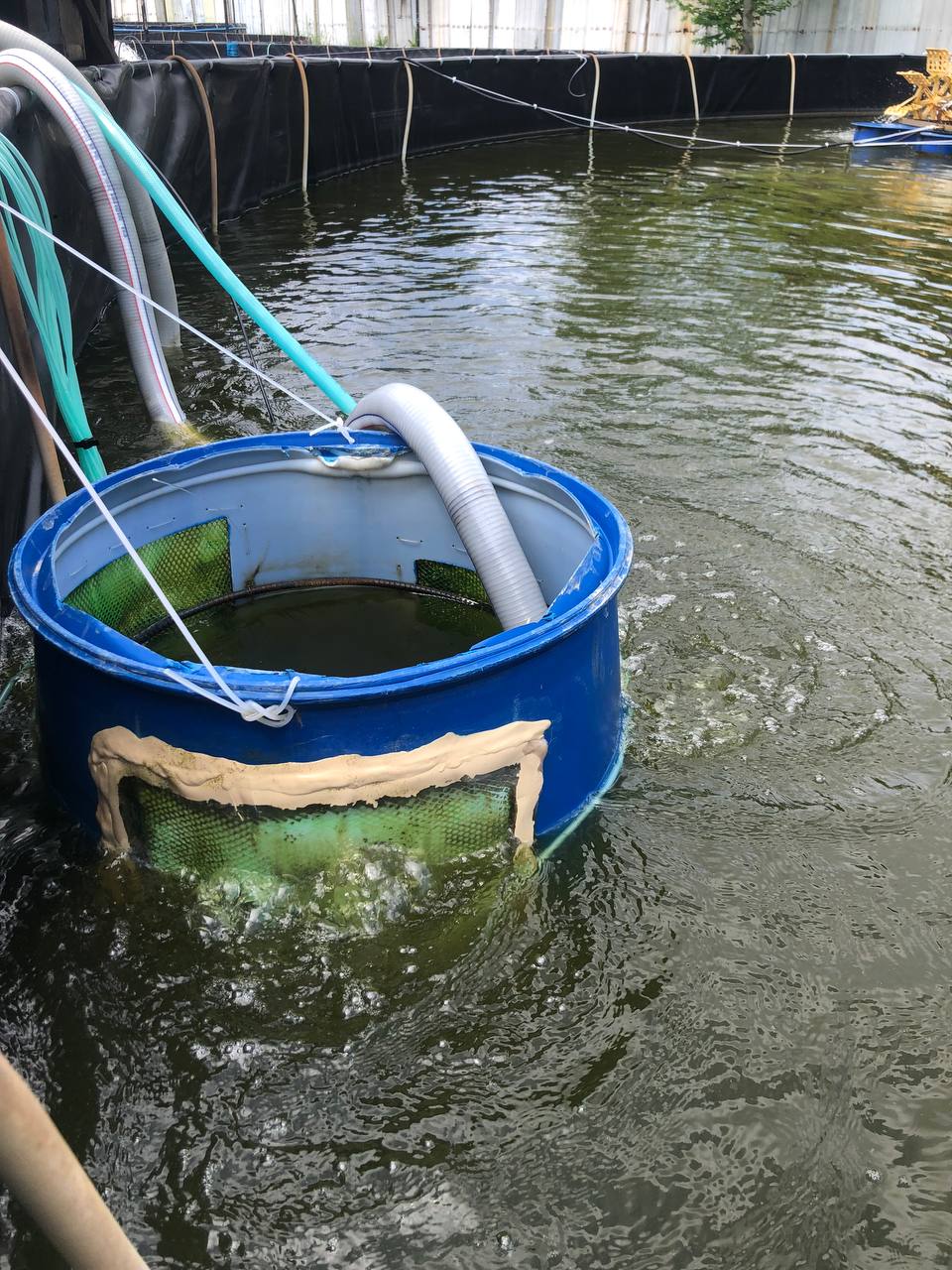
Fine bubbles (especially microbubbles, 20–100 μm) can significantly improve both shrimp survival rate and size uniformity during the nursery stage (PL8–PL30 or up to 1–3 g juveniles). Their benefits come from improving water quality, oxygen distribution, and shrimp behavior rather than simply increasing dissolved oxygen.
1. More stable dissolved oxygen throughout the nursery tank
In high-density nursery systems (3,000–10,000 PL/m²), oxygen demand changes rapidly.
Fine bubbles provide:
* Higher oxygen transfer efficiency than coarse bubbles.
* Better oxygen distribution throughout the water column.
* Fewer low-oxygen zones near the bottom.
* Smaller fluctuations between day and night.
Result
* Shrimp spend less energy coping with oxygen stress.
* Less crowding around aerators.
* Lower mortality after feeding peaks.
2. Better feed intake by all shrimp
One major reason for uneven sizes is unequal access to feed.
When oxygen is uneven:
* dominant shrimp occupy high-oxygen zones
* weaker shrimp remain in poorer areas
* feeding activity becomes uneven
Fine bubbles create a much more uniform oxygen field.
Consequently:
* shrimp spread more evenly
* more shrimp reach feeding trays
* feeding begins sooner after feed application
* weak shrimp continue feeding
Result
Higher average growth and narrower size distribution.
3. Reduced stress during molting
During molting shrimp have:
* highest oxygen demand
* weakest immune system
* poor swimming ability
Fine bubbles help by:
* maintaining oxygen close to the bottom
* preventing oxygen crashes
* reducing accumulation of CO₂
Result
* higher successful molt percentage
* fewer soft-shell mortalities
* better survival of smaller shrimp
4. Lower ammonia and nitrite stress
Fine bubbles increase oxygen available to nitrifying bacteria.
This improves:
* ammonia oxidation
* nitrite removal
* biofilter performance (RAS)
* beneficial biofloc activity
Lower ammonia means:
* better appetite
* faster molting
* healthier gills
5. Less accumulation of organic waste
Fine bubbles generate gentle circulation.
This keeps:
* feces suspended
* uneaten feed suspended
* bioflocs moving
instead of allowing thick sludge patches.
Benefits include:
* lower localized ammonia
* less hydrogen sulfide formation
* cleaner nursery bottom
6. Improved gill condition
Shrimp gills become stressed by:
* suspended solids
* bacterial slime
* organic debris
Fine bubbles increase water movement around the gills and improve oxygen availability, reducing physiological stress.
Healthy gills mean:
* better respiration
* better feed conversion
* faster growth
7. More uniform swimming behavior
In coarse-aerated systems, shrimp often aggregate around bubble plumes.
With fine bubbles:
* turbulence is gentler
* oxygen is more evenly distributed
* shrimp disperse throughout the tank
This results in:
* less competition
* fewer dominant territories
* more equal access to feed
8. Reduced cannibalism after molting
When oxygen is poor:
* newly molted shrimp recover slowly
* aggressive shrimp attack them
Fine bubbles help shrimp harden their new shells more quickly by maintaining high oxygen availability.
Result:
* reduced cannibalism
* higher survival
9. Better biofloc performance (if using biofloc nursery)
Fine bubbles keep flocs suspended without excessive shear.
Advantages include:
* more uniform microbial distribution
* better grazing by shrimp
* improved microbial protein utilization
This often leads to:
* higher growth
* lower FCR
* better size consistency
10. Better bacterial balance
High oxygen favors beneficial aerobic bacteria over anaerobic organisms.
This can reduce:
* organic decomposition odors
* opportunistic bacterial blooms
* production of toxic metabolites
The result is a healthier nursery environment.