https://www.sciencedirect.com/science/article/abs/pii/S0960852422004199
Highlights
• Nanobubble aeration of activated sludge was tested against coarse bubble aeration.
• Nanobubble aeration showed 6-fold higher oxygen transfer into water.
• Nanobubbles yielded 10% higher soluble chemical oxygen demand removal.
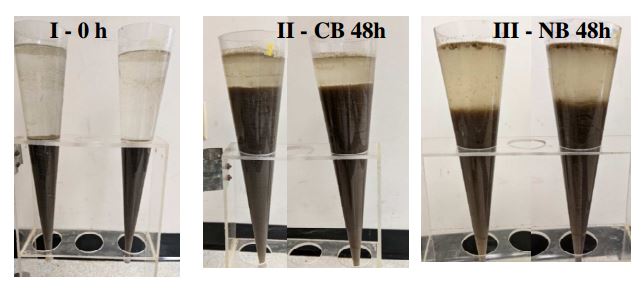
• Sludge settleability increased and floc formation was diminished by nanobubbles.
• The microbiome of the nanobubble aerated sample has lower alpha and beta diversities.
Abstract
Nanobubbles have the potential to curtail the loss of oxygen during activated sludge aeration
due to their extensive surface areas and lack of buoyance in solution. In this study, nanobubble
aeration was explored as a novel approach to enhance aerobic activated sludge treatment
and benchmarked against coarse bubble aeration at the lab scale. Nanobubble aerated
activated sludge reactors achieved greater dissolved oxygen levels at faster rates. Higher
soluble chemical oxygen demand removal by 10% was observed when compared to coarse
bubble aeration with the same amount of air. The activated sludge produced compact sludge
yielding easier waste sludge for subsequent sludge handling. The samples showed fewer
filamentous bacteria with a lower relative abundance of floc forming Corynebacterium,
Pseudomonas, and Zoogloea in the sludge. The microbiome of the nanobubble-treated
activated sludge showed significant shifts in the abundance of community members at the
genus level and significantly lower alpha and beta diversities
.png)
Conclusions
In situ NB aeration showed effective and rapid oxygenation of activated sludge. NBs reduced
the abundance of filamentous bacteria and resulted in a lower settled sludge volume compared
to CB aeration, potentially due to efficient oxygen supply into the activated sludge. A 10% higher
sCOD was consumed within 48 h under NB aeration compared to CB aeration. Floc forming
bacterial abundance was notably decreased, influencing the sludge settleability. Significant
differences between NB and CB aerated samples' microbiome were observed, indicating different
selective pressures on the microbial consortium. Microbial diversity was significantly decreased
in the NB aerated activated sludge.