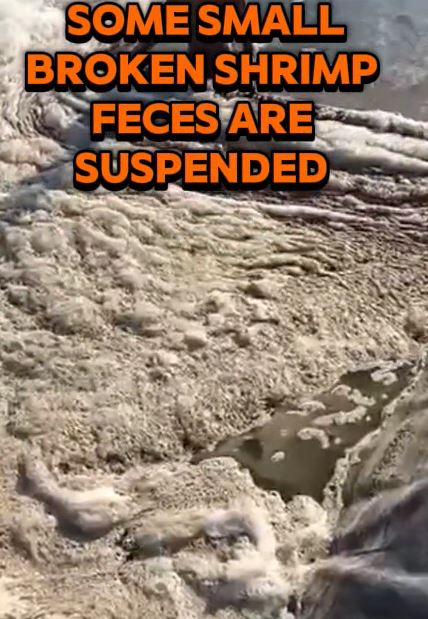
EHP spores are shed by infected shrimp and can enter the environment through feces. Contaminated material can then spread through the water and accumulate in pond sediment. It is highly recommended to remove feces and other organic solids and using central drains “shrimp toilets” to reduce horizontal transmission pressure.
EHP-infected shrimp → feces → suspended organic particles → TSS → redistribution through pond → bottom sediment → exposure of other shrimp
Therefore, reducing the amount of suspended organic material can help reduce the transport and recirculation of EHP-contaminated particles.
Nanobubbles provide several useful effects:
a. High oxygen transfer: Improves DO and helps maintain aerobic microbial processes
b. Fine-bubble circulation: Improves water movement and can help bring fine particles toward collection/removal zones
c. Particle interaction: Fine bubbles can attach to some suspended particles and promote their aggregation/flotation
d. Organic-matter control: Can support oxidation/degradation of organic material, particularly when combined with appropriate treatment processes
e. Reduced anaerobic zones: Better oxygen distribution can reduce accumulation of highly reduced organic sludge
f. Better solids removal efficiency: When coupled with a settling/flotation/side-stream filtration system, can physically remove TSS from the pond
Nanobubbles do not magically destroy TSS. The strongest engineering approach is:
Nanobubbles → mobilize/aggregate/condition fine solids → mechanical removal → lower TSS
rather than simply injecting nanobubbles and expecting TSS to disappear.
Lower TSS → fewer suspended fecal/organic particles → less redistribution of EHP-contaminated material → less opportunity for shrimp to encounter contaminated material → potentially lower infection pressure.