https://onlinelibrary.wiley.com/doi/10.1002/wer.70269
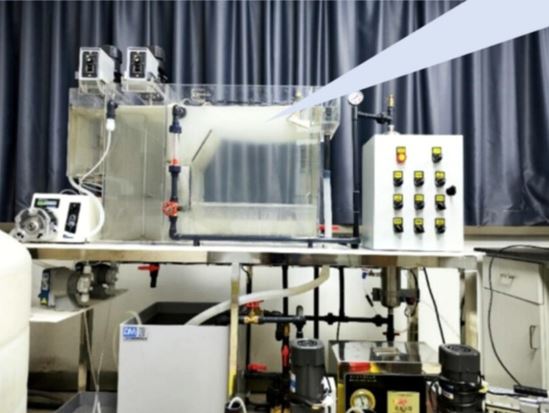
Achieving ultra-low phosphorus levels (< 0.05 mg L−1) in wastewater effluents is a critical engineering challenge for mitigating eutrophication. This study developed a coupled microflocculation and micro-nanobubble flotation process for enhancing phosphorus removal. Comprehensive screening determined that 50 mg L−1 polyaluminum chloride coupled with 1.0 mg L−1 cationic polyacrylamide provided optimal microflocculation performance. Orthogonal experiments confirmed that a hydraulic retention time of 15 min, aeration rate of 200 L h−1, and dissolved air pressure of 0.60 MPa resulted in the highest TP removal efficiency. The process was able to reduce TP in actual secondary effluent from 0.86 to 0.036 mg L−1, achieving an average removal efficiency of 95.8% over 30 days of continuous operation. Mechanistic analysis revealed that high dissolved air pressure (0.60 MPa) was critical for generating a dense, bimodal distribution of micro- and nanobubbles with extended residence times, dramatically increasing bubble-floc collision and electrostatic attachment efficiency. This study establishes a highly efficient technology for meeting increasingly stringent phosphorus discharge standards in municipal wastewater treatment
.png)