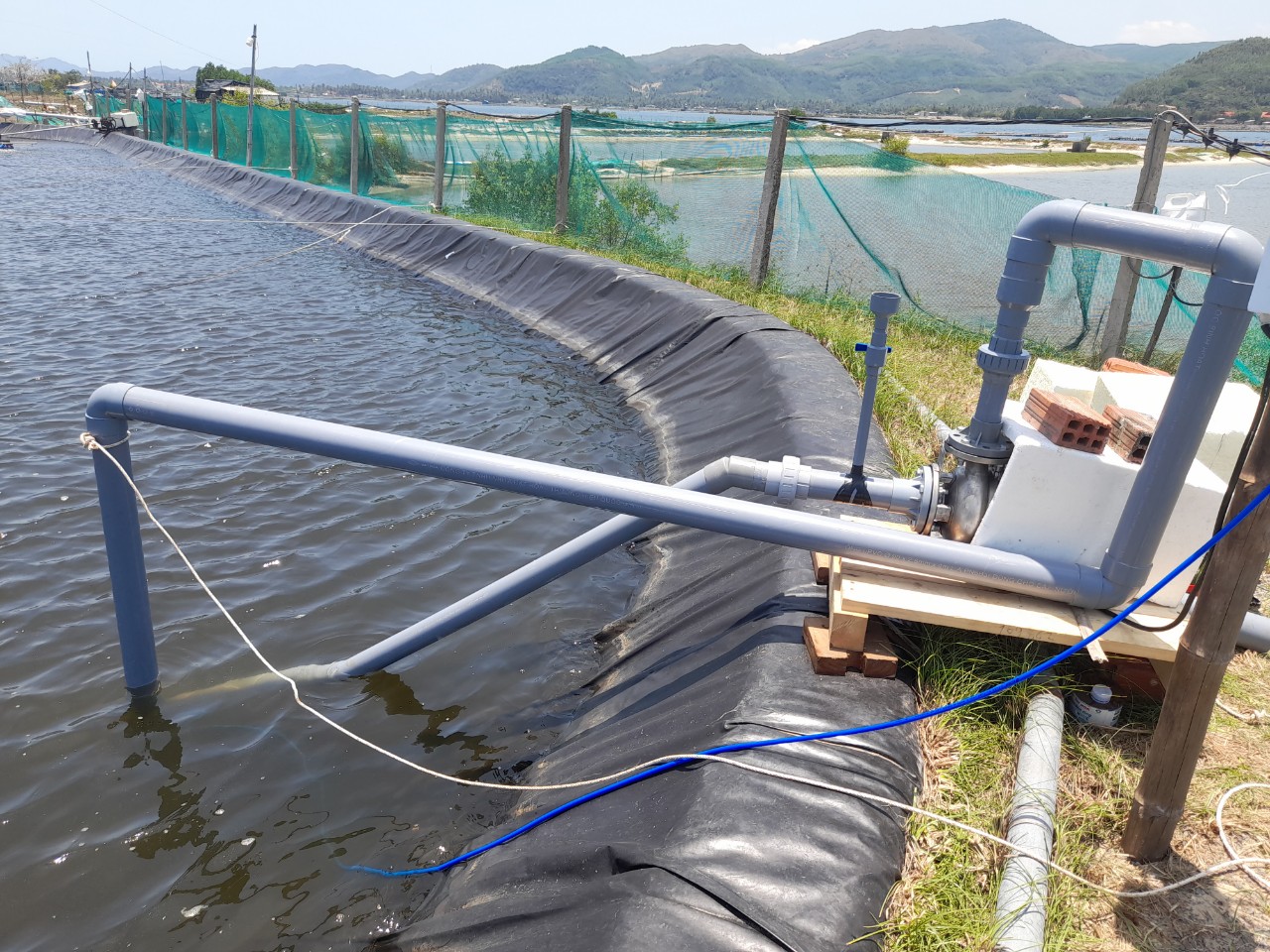
In a high-intensive vannamei pond with low daily water exchange, nanobubble aeration and a protein skimmer can complement each other very well as they solve different parts of the problem:
- Nanobubbles → oxygenation + circulation + support of microbial oxidation
- Protein skimmer (foam fractionator) → export of dissolved/fine organic matter together with controllable sterilization when necessary to curb with excessive bacterial development or piked level of suspended solids
Together both Nanobubbles and Protein Skimmers help a shrimp pond with less dependence on water exchange and better control of the organic load
1. The basic problem in a low-exchange intensive pond
As biomass and feeding increase, the pond progressively accumulates:
Feed → shrimp metabolism + feces →
* TAN / NH₃
* nitrite
* dissolved organic matter (DOC)
* proteins and amino acids
* fine fecal particles
* bacterial biomass
* TSS
* BOD/COD
* phosphate
* sulfide risk in poorly oxygenated zones
Normally, water exchange exports part of this load.
With very low exchange, you need an internal treatment loop.
A useful concept is: Pond → solids/organic removal → oxygenation → pond
rather than simply: Pond → water exchange → outside
2. What nanobubbles contribute
A nanobubble system should ideally be installed as a recirculation loop, rather than thinking of it simply as another air diffuser.
For example:Pond water → pump → nanobubble generator → O₂ (air injection) → return to pond
Important benefits are:
① Maintain DO
This is the first priority.
More available oxygen supports:
* shrimp respiration
* nitrification
* aerobic decomposition
* oxidation of reduced compounds
* aerobic microbial communities
② Improve oxygen availability throughout the pond
If the nanobubble return is positioned correctly, the water jet can create horizontal circulation in addition to oxygen transfer.
This is particularly interesting for intensive ponds because you want to eliminate:
high-oxygen surface water + oxygen-poor bottom zones.
③ Support nitrification
More oxygen makes it easier for nitrifying bacteria to convert:
NH₃ → NO₂⁻ → NO₃⁻
rather than allowing ammonia/nitrite to accumulate.
④ Support aerobic degradation of organic matter
Nanobubble aeration has been associated with changes in pond microbial communities, including increases in some bacterial groups considered beneficial.
3. What the protein skimmer contributes
It converts organic material in the water into foam and physically exports it from the culture system.
Conceptually: Water + fine bubbles → organic compounds attach to bubble surfaces → foam rises → foamate is discharged.
It is particularly useful for:
* dissolved organic matter
* proteins
* lipids
* fine organic particles
* bacterial aggregates
* very fine suspended solids