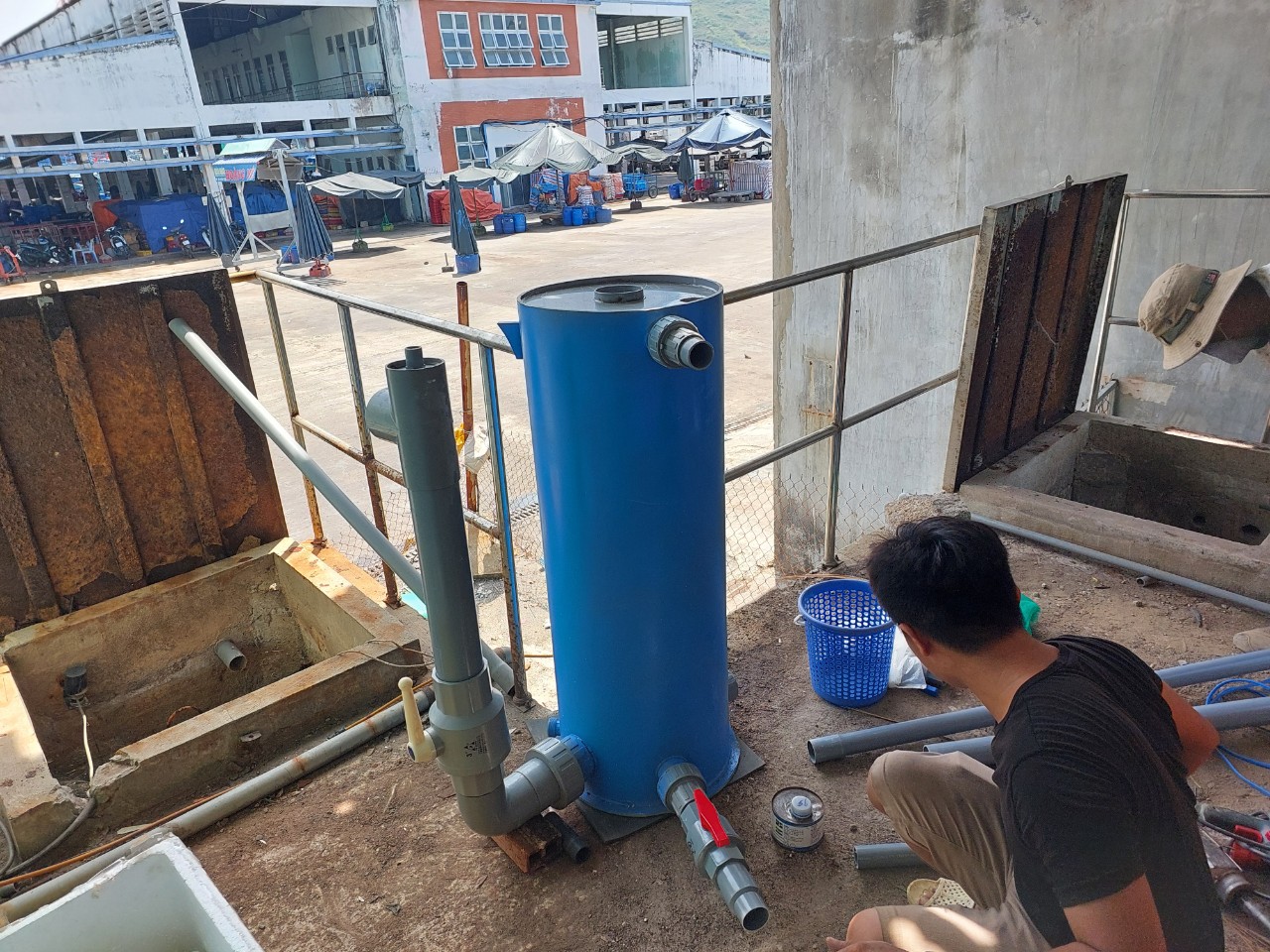
A protein skimmer (foam fractionator) can be an effective primary treatment technology for wastewater from marine fish cleaning operations, particularly when the wastewater contains high concentrations of proteins, fats, blood, mucus, and fine suspended organic particles.
Main contaminants in marine fish market wastewater
Wastewater generated during fish cleaning typically contains:
* Blood proteins (albumin, hemoglobin)
* Fish slime and mucus
* Fish oils and fats
* Small tissue fragments
* Scales and skin particles
* Dissolved organic compounds
* Fine suspended solids
* High biochemical oxygen demand (BOD)
* High chemical oxygen demand (COD)
* Nitrogen from proteins
Most of these contaminants are surface-active, making them ideal candidates for foam fractionation.
How a protein skimmer removes pollutants
A protein skimmer injects millions of fine air bubbles into a vertical reaction chamber.
As wastewater flows upward:
1. Hydrophobic organic molecules adsorb onto bubble surfaces.
2. Blood proteins and fish mucus rapidly coat the bubbles.
3. Bubble clusters rise.
4. Stable foam forms at the top.
5. Foam overflows into a collection cup.
6. Concentrated organic waste is removed before biological decomposition begins.
Instead of allowing proteins to decay into ammonia, they are physically removed.
Benefits for marine fish market wastewater
1. Immediate reduction in organic loading
Blood is one of the highest BOD contributors.
Removing blood before decomposition can substantially reduce:
* BOD
* COD
* Oxygen demand on downstream treatment
2. Odor reduction
Fish blood quickly decomposes into:
* ammonia
* amines
* sulfur compounds
Removing proteins early reduces:
* rotten fish odor
* septic smell
* complaints from nearby residents
3. Less sludge production
Compared with biological treatment alone:
Protein skimmers physically separate organics rather than converting them into microbial biomass.
Benefits include:
* lower sludge production
* easier sludge handling
* lower disposal costs
4. Reduced load on biological treatment
If wastewater subsequently enters:
* Moving Bed Biofilm Reactor (MBBR)
* Activated sludge
* Membrane Bioreactor (MBR)
the skimmer can significantly reduce the organic load reaching these systems, improving treatment stability and reducing aeration energy.
5. Better grease removal
Fish oils readily adhere to fine bubbles.
Protein skimmers can remove:
* fish oil droplets
* emulsified fats
* floating grease
This helps prevent:
* clogged pipes
* grease accumulation
* biofilm formation
6. Improved water clarity
Fine suspended organic particles are removed before settling.
Water leaving the skimmer is often noticeably clearer.