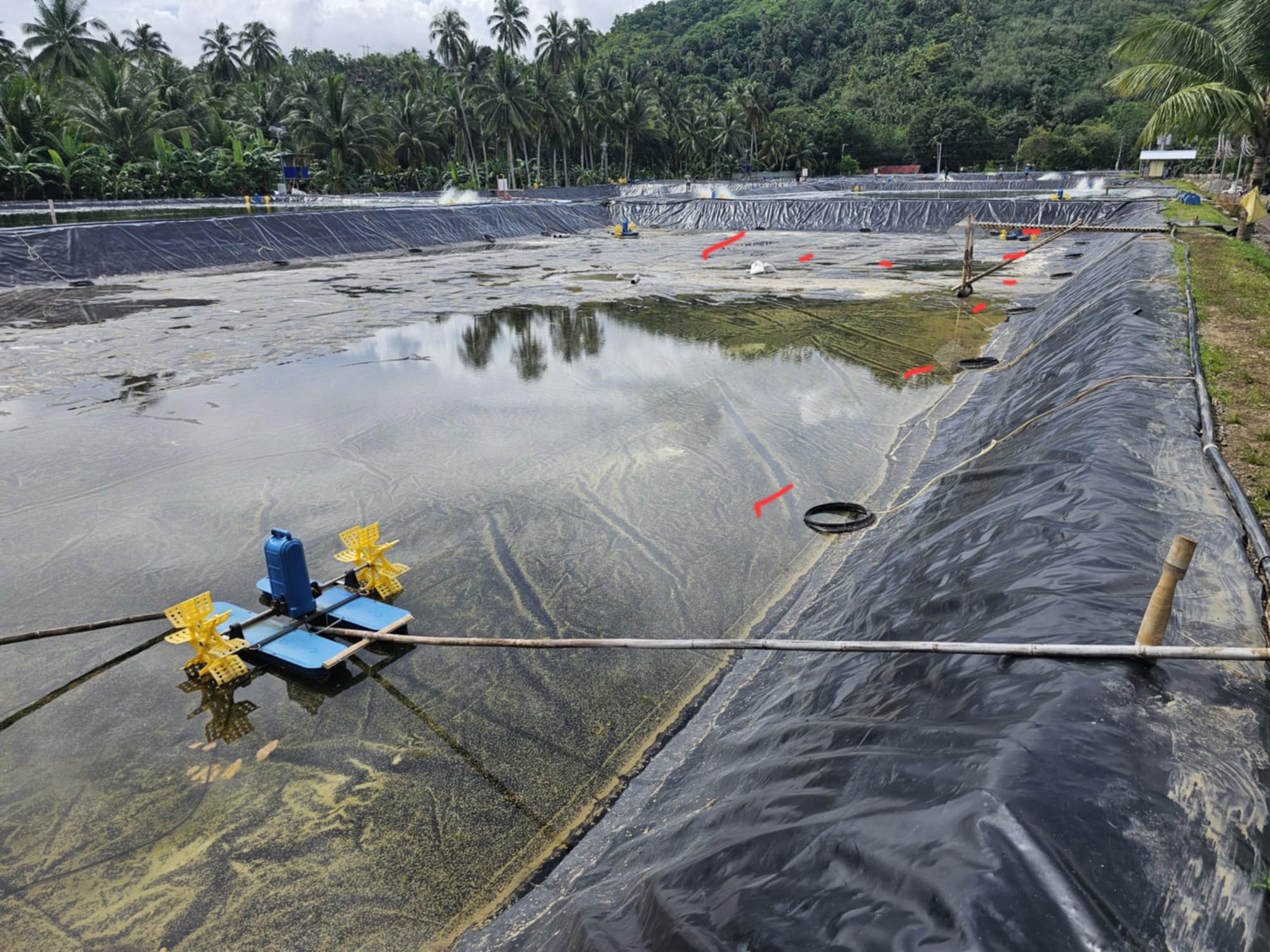
In highly intensive shrimp farming (200–500+ shrimp/m²), an air fine bubble system (typically producing bubbles of 30–200 μm) provides benefits that go well beyond conventional aeration.
1. Excellent Oxygen Transfer
Compared with coarse bubble diffusers:
* much larger total surface area
* slower rising velocity
* longer residence time
* higher Oxygen Transfer Efficiency (OTE)
Benefits include:
* higher dissolved oxygen
* fewer oxygen-poor zones
* better nighttime oxygen reserve
* improved shrimp growth
2. Floatation of Suspended Dirt (Natural DAF Effect)
One of the biggest advantages of fine bubbles is their ability to attach to suspended particles.
These include:
* feces
* uneaten feed
* biofloc fragments
* algae debris
* bacterial flocs
* detritus
The attached bubbles decrease the particles' effective density, allowing them to rise toward the surface where they can be removed by:
* overflow weirs
* protein skimmers
* foam fractionators
* surface skimmers
This principle is similar to Dissolved Air Flotation (DAF), although air fine bubble systems generally operate without pressurized air saturation.
Benefits:
* less organic loading
* lower BOD
* lower sludge formation
* cleaner pond bottoms
3. Improved Water Clarity
By continuously removing suspended organic matter:
* turbidity decreases
* Total Suspended Solids (TSS) decrease
* finer particles aggregate more easily
* clearer water
Advantages include:
* easier shrimp observation
* better feeding management
* healthier phytoplankton balance
* improved camera visibility for automated feeding
4. Reduced Organic Sludge
Fine bubbles continuously lift light organic particles before they settle.
This means:
instead of
Feed → Bottom → Anaerobic sludge
you obtain
Feed → Suspended → Floatation → Removal
Benefits:
* thinner sludge layer
* less hydrogen sulfide production
* lower methane production
* cleaner pond bottoms
5. Better Biofloc Control
Fine bubbles help keep bioflocs suspended without excessive turbulence.
Benefits:
* more stable biofloc size
* less floc settling
* improved microbial activity
* better shrimp access to nutritious flocs
6. Better Oxygen Distribution
Paddlewheels mainly oxygenate near the surface.
Fine bubbles distribute oxygen throughout:
* bottom
* middle
* upper water column
This reduces:
* oxygen stratification
* bottom hypoxia
* shrimp crowding near aerators
7. Improved Nitrification
Nitrifying bacteria require oxygen.
Fine bubbles increase oxygen availability on biofilms and suspended microbial communities.
Results include:
* faster ammonia oxidation
* reduced nitrite accumulation
* improved biofilter efficiency in lined ponds and RAS-style shrimp systems
8. Mild Sterilization Effect
Air fine bubbles can generate tiny amounts of reactive oxygen species (ROS) when bubbles collapse, and they improve contact between microorganisms and dissolved oxygen.
Potential effects:
* modest reduction in some free-floating bacteria
* suppression of localized anaerobic conditions
* cleaner water surfaces
However, air fine bubbles alone should not be considered a sterilization technology. Their antimicrobial effect is much weaker than systems using ozone, UV, or disinfectants.
9. Lower Energy Consumption (Compared with Coarse Aeration for Similar Oxygen Transfer)
Because of higher oxygen transfer efficiency:
* fewer cubic meters of air may be required for the same oxygen transfer
* blowers can often operate at lower airflow rates while maintaining dissolved oxygen
* paddlewheel operating time may be reduced in some conditions
Actual energy savings depend on diffuser design, water depth, fouling, and blower efficiency.
Overall
For highly intensive shrimp ponds, air fine bubbles provide multiple synergistic benefits:
* High oxygen transfer efficiency and more uniform dissolved oxygen distribution.
* Enhanced flotation and removal of suspended organic matter, leading to clearer water.
* Reduced sludge accumulation and lower risk of anaerobic zones and toxic gases.
* Better support for nitrifying bacteria and biofloc stability.
* Improved gas exchange, helping stabilize pH and reduce carbon dioxide buildup.
* Gentle water circulation that minimizes dead zones.
* A modest antimicrobial effect, though not a substitute for dedicated disinfection technologies.
* Potential reductions in aeration energy requirements when properly engineered.