Common Problems:
- Dissolved Oxygen Competition and Disease Spread by Invasion of un-wanted species: shellclams, snails, oysters, mud crabs
- Algae bloom and crash created by too much organic sludge buid-up
- Hydrogen Sulphur H2S release from black or grey bottom sludge
- Shrimps surfacing to gasp for air in early morning before sunrise
Key features of Fine bubbles (Microbubbles and Nanobubbles) to be used:
a. Nanobubbles (less than 1 micrometer) and Microbubbles (10-60 micrometers) with slow rising velocities
can remain and be suspended for a period of time long enough to be spread by water flow currents created by
the fine-bubbled-water flow and the paddle wheels (the most commonly used in shrimp farming)
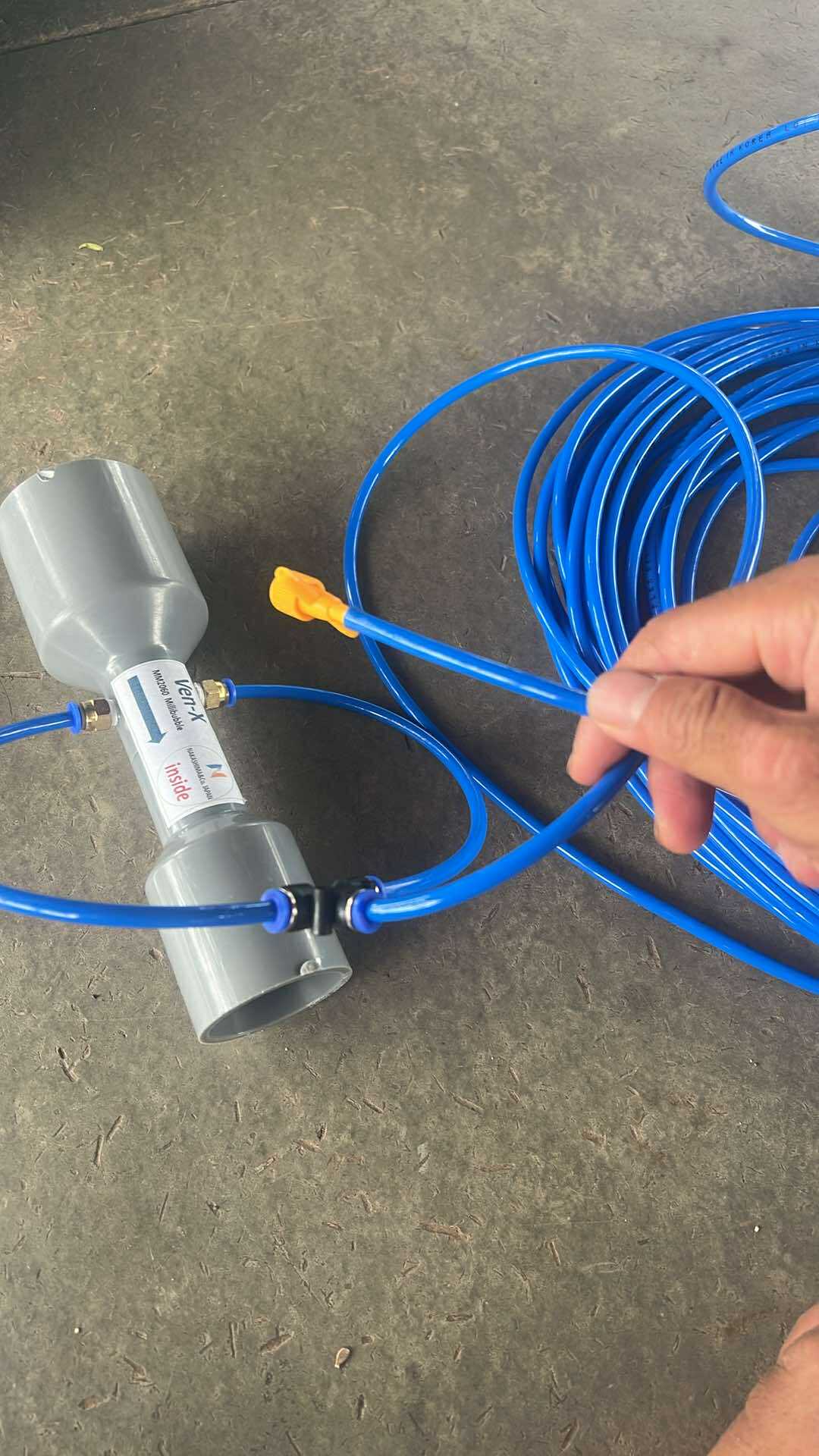
b. Fine-bubbled water is made near the bottom sludge to provide necessary dissolved oxygen to
the shrimps and nitrification process supported by microbiome in the bottom sludge
c. Negative electrostatic charged fine bubbles can stick around suspended fine substances in pond
(dead algae, fine shrimp excrements, dirts) which can then be floated up to water surface.
Regular and on-time removal of such floated dirts can help reduce water turbidity and viscosity.
Once the water clarify is improved, much more dissolved oxygen can be naturally created by algae
photosynthesis, which gives way to reduce the energy spent for aerators (paddle wheels)during day-time.
When water viscosity is reduced, aeration efficiency from surface aerators (paddle wheels) is much
improved.
d. For reduction and control of harmful bacteria and vibrio, Ozone Nanobubbles or Air Nanobubbles plus Hydrogen
Peroxide can be used with caution.
Safer and more controllable sterilization effect by Ozone Nanobubbles or Air Nanobubbles (plus H2O2)
can be performed in Protein Skimmers (or so-called Foam Fractionators) where suspended dirts after oxdization
can be expelled at once out of the skimmed water while the ORP (oxidization-reduction potential) of the skimmed
water can be measured and monitored (not to exceed 300…350mV)