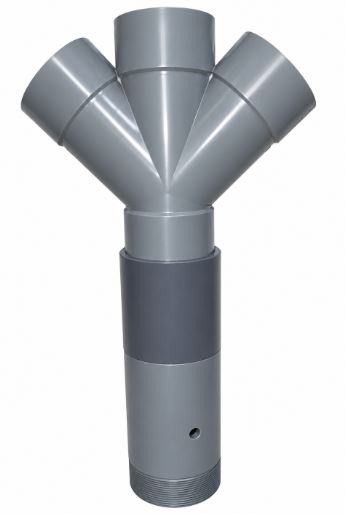
https://nanobubbles.jp/mnb80-180-80-to-180-m3-h-upvc
Nanobubbles can support ecological rejuvenation of algae-impacted rivers, lakes, ponds, and seabeds, mainly by improving oxygen conditions, accelerating organic-matter decomposition, and disturbing the conditions that allow persistent algal blooms.
1. How the rejuvenation mechanism works
The basic concept is:
*Nanobubble injection → higher dissolved oxygen → better aerobic decomposition → less organic loading → healthier sediment → reduced nutrient release → less algae pressure
Nanobubbles are particularly interesting because they can remain in water much longer than conventional millimetre-scale aeration bubbles and provide a large gas–liquid interfacial area.
2. Reduce the anaerobic condition at the bottom
Algae blooms often create a cycle:
*Excess nutrients → algae growth → algae die-off → organic matter settles → microbial decomposition consumes O₂ → bottom becomes hypoxic/anoxic → nutrients are released from sediment → new algae bloom
Oxygen nanobubbles can interrupt this cycle by supplying oxygen to the water column and, under appropriate conditions, improving oxygen availability near the sediment-water interface.
This can promote aerobic microbial activity and reduce the formation of strongly reducing conditions.
3. Help reduce internal nutrient loading
An important problem in eutrophic lakes and ponds is that the sediment itself becomes a nutrient source.
Under low-oxygen conditions, sediment can release compounds containing phosphorus and nitrogen back into the water.
Maintaining a more oxygenated sediment-water interface can help reduce this internal nutrient release, particularly phosphorus associated with iron minerals.
So the objective is not simply:
> "Kill the algae."
It is to remove the conditions that continuously feed the algae.
4. Accelerate decomposition of dead algae and organic sludge
After an algae bloom collapses, large quantities of dead algae can accumulate.
Oxygen nanobubbles can support aerobic microorganisms that degrade this organic material:
*Dead algae + O₂ → microbial decomposition → CO₂ + H₂O + biomass
This can help reduce:
* COD/BOD
* organic sludge
* hydrogen sulfide formation
* foul odors
* black anaerobic sediment
For heavily polluted water, however, oxygenation alone may not remove the accumulated nutrients; physical removal or other treatment may still be necessary.
5. Reduce anaerobic gases and odors
Poorly oxygenated sediment can generate compounds such as:
* H₂S
* methane
* ammonia
* other reduced sulfur compounds
Improving the redox environment can suppress anaerobic pathways and therefore help with black-water/black-sediment and odor problems.
This is particularly relevant to ponds and shallow lakes where organic sludge has accumulated for years.
6. Nanobubbles can also interact directly with suspended particles
Nanobubble systems can modify particle aggregation and flotation behavior. Depending on bubble size, surface chemistry, water chemistry and operating conditions, bubbles can attach to suspended particles and organic material.
This creates an opportunity for a combined process:
*Nanobubbles → flotation/aggregation → surface skimming → removal of algae + organic solids
This is especially attractive when the system combines oxygen or ozone nanobubbles with a surface collection/skimming system.
For ecological restoration, oxygen nanobubbles are generally the gentler continuous-treatment approach.
Ozone nanobubbles are more appropriate as a controlled oxidation treatment, particularly when there is a severe algae/organic pollution problem.
7. The most important point: don't simply "oxygenate the whole lake"
For a large lake, trying to oxygenate the entire water volume can require enormous energy.
A better strategy can be:
*Target the zones responsible for the problem.
For example:
* deepest hypoxic areas
* sediment accumulation zones
* algae accumulation zones
* stagnant coves
* inflow areas with high nutrient loading
* areas with very high COD/BOD
This can dramatically reduce the required treatment capacity.
8. For seawater / seabed restoration
The mechanism is somewhat different.
In coastal waters, fish/shrimp farms, marinas and enclosed bays, excess organic matter can accumulate on the seabed:
*Uneaten feed + feces + dead algae → sediment organic loading → oxygen depletion → sulfide generation → benthic ecosystem deterioration
Oxygen nanobubbles can be used to improve oxygen availability around the sediment-water interface and support aerobic decomposition.
A conceptual system would be:
*Seawater → pump → oxygen nanobubble generator → bottom diffuser/distribution manifold → seabed.
with continuous monitoring of DO, ORP, pH, temperature and sulfide.