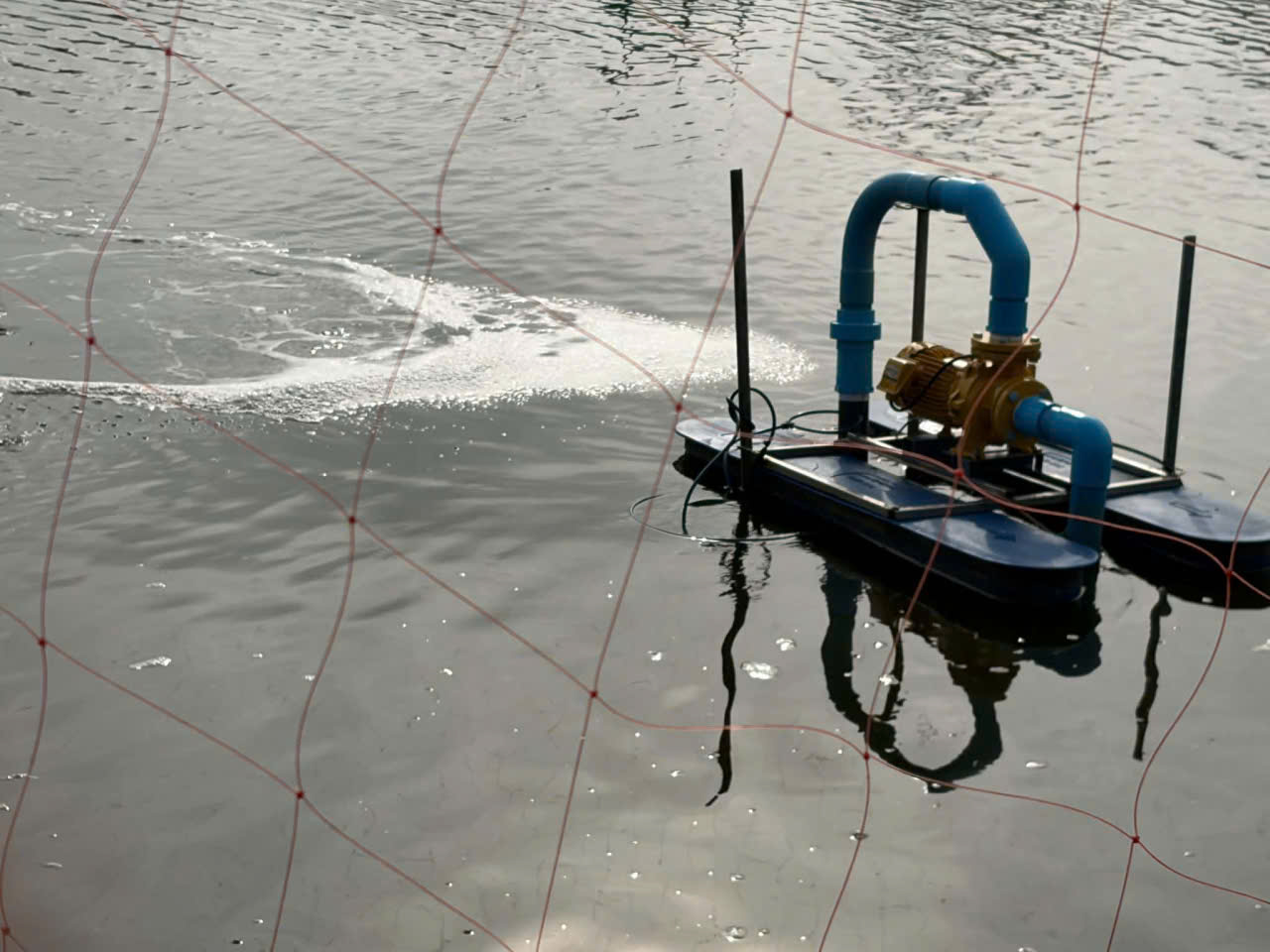
An intensive shrimp pond with a gravel and stone layer over the soil bottom behaves differently from a conventional earthen pond. The gravel creates a large surface area for beneficial biofilms but also provides many spaces where organic matter can accumulate. Nanobubbles (especially oxygen nanobubbles) can help address these challenges while enhancing the biological advantages of the gravel bed.
1. Better oxygen penetration into the gravel bed
Unlike coarse aeration, oxygen nanobubbles remain suspended for hours to days and distribute dissolved oxygen more uniformly.
Benefits include:
* Higher oxygen concentration around gravel particles
* Reduced oxygen depletion within the upper gravel layer
* More stable aerobic conditions even during nighttime
* Less formation of anaerobic pockets between stones
This is particularly important because shrimp spend considerable time on the pond bottom.
2. Healthier biofilm on gravel surfaces
One advantage of gravel-bottom ponds is the large surface area available for microbial colonization.
Nanobubbles promote:
* Growth of aerobic nitrifying bacteria
* Development of stable beneficial biofilms
* Faster conversion of ammonia to nitrate
* Reduced dominance of harmful anaerobic bacteria
The gravel essentially becomes a highly efficient biological filter.
3. Reduced sludge accumulation between stones
Organic matter naturally settles into the gaps between gravel.
Nanobubbles help by:
* Increasing aerobic decomposition
* Enhancing bacterial enzyme activity
* Preventing sludge from becoming septic
* Reducing foul-smelling deposits
The result is cleaner gravel with less maintenance.
4. Lower hydrogen sulfide (H₂S) production
One major concern with gravel-bottom ponds is that trapped organic matter can become anaerobic.
Nanobubbles help by:
* Maintaining aerobic conditions
* Oxidizing reduced sulfur compounds
* Suppressing sulfate-reducing bacteria
* Preventing black sludge formation
This greatly lowers the risk of sudden H₂S release.
5. Improved ammonia and nitrite removal
Because nitrifying bacteria require oxygen:
Higher DO around gravel surfaces results in
* faster ammonia oxidation
* lower nitrite accumulation
* more stable nitrogen cycling
* reduced toxic nitrogen stress
6. More uniform oxygen distribution in deep ponds
Outdoor intensive ponds often exceed 2 meters in depth.
Conventional paddle wheels mainly oxygenate the upper water.
Nanobubbles distribute oxygen throughout the water column, improving:
* bottom DO
* mid-water DO
* nighttime oxygen stability
This is particularly beneficial in deep lined ponds.
7. Better shrimp feeding activity
Shrimp feed primarily on the pond bottom.
Higher bottom oxygen leads to
* greater feed consumption
* longer feeding periods
* improved digestion
* less leftover feed
Feed conversion ratio (FCR) often improves because shrimp remain active longer.
8. Stronger nitrification inside gravel
The gravel acts similarly to submerged media in a moving bed biofilter.
Nanobubbles continuously supply oxygen to:
* Nitrosomonas bacteria
* Nitrobacter/Nitrospira bacteria
* other aerobic microorganisms
This increases the pond's natural biofiltration capacity.
9. Reduced pathogenic bacterial pressure
Higher oxygen and healthier microbial communities generally suppress:
* Vibrio proliferation
* anaerobic pathogens
* opportunistic bacteria
If ozone nanobubbles are used intermittently (with careful dosing), they can further reduce pathogen loads while leaving residual dissolved oxygen after ozone decomposes.
10. Improved water clarity
Nanobubbles may improve water clarity through several mechanisms:
* enhanced microbial degradation of dissolved organics
* flotation of fine suspended solids (when integrated with foam fractionation/protein skimming)
* reduced release of black organic particles from the pond bottom
11. Better shrimp survival during adverse weather
During cloudy days, rain, or periods of low photosynthesis:
Nanobubbles help maintain:
* higher dissolved oxygen reserves
* reduced oxygen fluctuations
* lower stress
* improved survival
12. Reduced dependence on intense mechanical aeration
Nanobubbles do not replace paddle wheels but can complement them.
This allows:
* fewer blower operating hours
* reduced energy consumption
* improved oxygen utilization efficiency
* more stable DO with lower peak aeration demand
13. Enhanced mineral cycling
Gravel surfaces support microbial communities involved in cycling:
* iron
* manganese
* sulfur
* phosphorus
Improved oxygen availability helps keep these cycles aerobic and minimizes the release of undesirable reduced compounds.