https://www.hortidaily.com/article/9842355/oxygen-levels-in-irrigation-water-deserve-more-attention-during-summer/
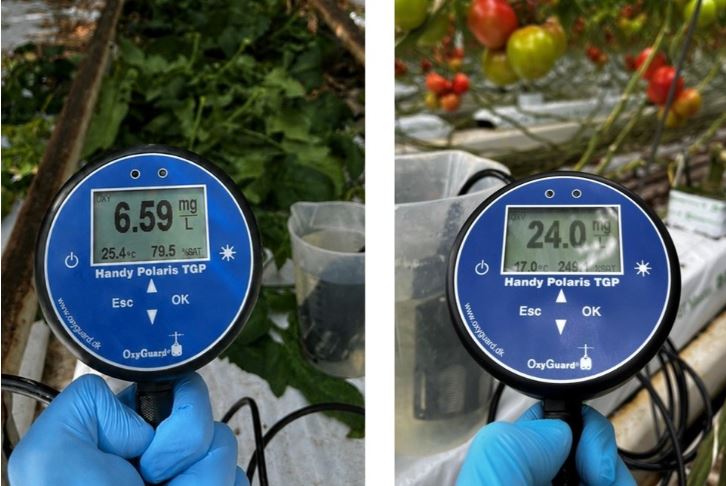
"Water temperature and dissolved oxygen have an inverse relationship: the warmer
the water, the less oxygen it can hold," Vogels explains. "These anaerobic conditions
are not only detrimental to root development, they also create favorable conditions for plant pathogens."
Under low-oxygen conditions, roots struggle to produce energy. This slows nutrient
uptake and increases susceptibility to disease. "We are talking about pathogens and
fungi such as Pythium, Fusarium, and Phytophthora, which thrive when oxygen levels in the root zone are low," Vogels says
Moleaer uses nanobubble technology to retain oxygen in irrigation water and transport it to the root zone.
The system maintains high oxygen concentrations from the unit or day tank all the way to the
dripper, sprayer, or ebb-and-flow floor.
"Billions of negatively charged nanobubbles alter the conductivity of the water, fix the oxygen
that is introduced, and carry it all the way to the crop. This supports better root health, even under extreme heat conditions."