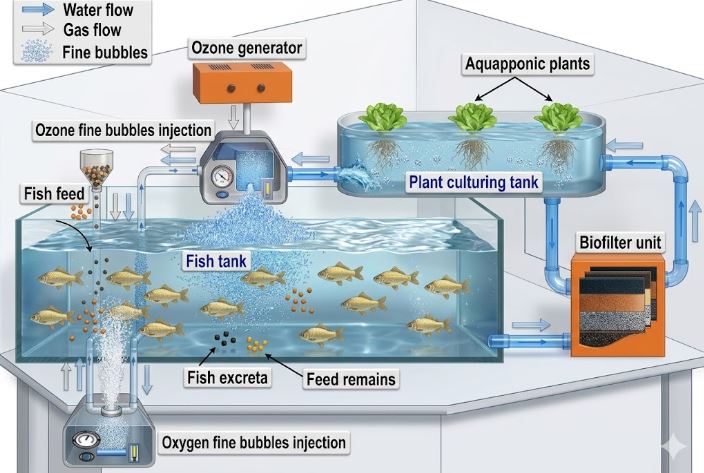
High-density aquaculture and hydroponic systems are essential for
sustainable food production, yet they often face persistent challenges
in maintaining dissolved oxygen (DO) levels, controlling microbial activity,
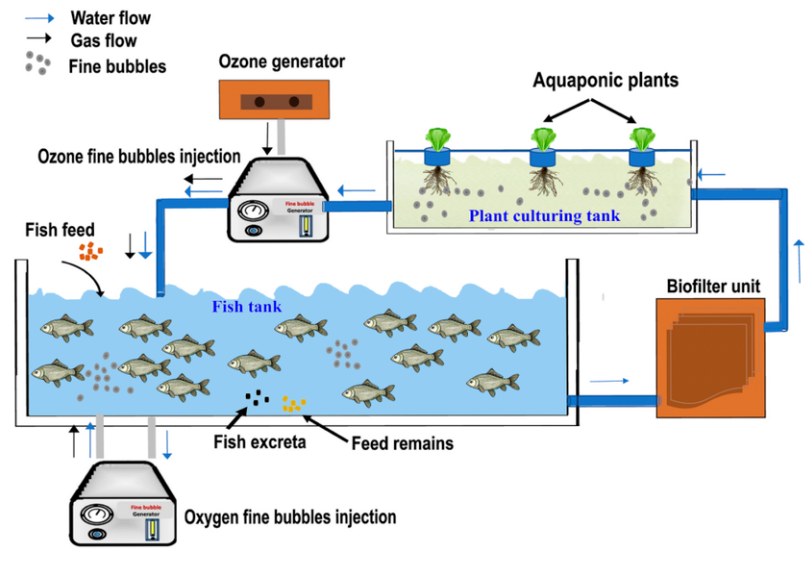
and optimizing nutrient cycling. This study investigates the integration of
oxygen and ozone fine bubble systems as a solution to these issues, with a
focus on their effects on system performance and productivity. Over a 12-week
experimental period, DO levels, nutrient availability, and biological outcomes were
monitored to evaluate the effectiveness of the proposed approach. The results
showed that the combined oxygen and ozone fine bubble system increased fish
growth rates by 52.8% and survival rates by 11.6%, while enhancing plant yield by
37.4% compared to the control group. Strong positive correlations were observed
between DO levels and both fish growth (r = 0.96r = 0.96r = 0.96) and plant yield
(r = 0.91r = 0.91r = 0.91), highlighting the critical role of oxygenation. Time-series
data revealed stable improvements in DO levels and nutrient availability in the fine
bubble system, with significant reductions in ammonia accumulation. These findings
underscore the importance of precise oxygenation and microbial control in high-density
systems. This study provides robust evidence for the practical application of fine bubble
technologies in improving both ecological sustainability and economic efficiency.
By addressing key limitations in current aquaculture and hydroponic systems, the
research offers a pathway for scaling these technologies to meet the demands of modern food production.
.png)