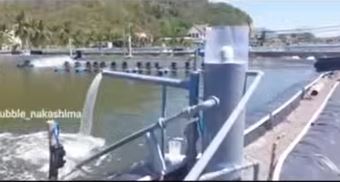
https://www.youtube.com/shorts/xnp_-2NI0x4
For an intensive shrimp farm located in an area with limited access to clean and pathogen-free water,
a protein skimmer (foam fractionator) can provide benefits that go far beyond simple water clarification.
It effectively helps the farm become more self-sufficient and reduces dependence on water exchange.
This is usually the most important benefit in water-scarce areas.
A protein skimmer removes:
Dissolved organic carbon (DOC)
Proteins
Lipids from feed
Fecal metabolites
Fine suspended particles attached to organic compounds
Without removal, these compounds accumulate and force farmers to exchange water.
By continuously exporting organics, the pond can operate with:
Lower water exchange
More stable water quality
Lower risk of introducing pathogens from outside water sources
This is particularly valuable for preventing diseases such as White Spot Syndrome and Acute Hepatopancreatic Necrosis Disease.
Accumulated dissolved organics become food for heterotrophic bacteria.
As bacterial populations increase:
Oxygen consumption rises
Night-time DO crashes become more likely
Removing organics before bacterial decomposition can reduce:
Biological oxygen demand (BOD)
Oxygen consumption
Emergency aeration requirements
This is especially important in high-density shrimp ponds.
Protein skimmers remove compounds responsible for:
Yellow water
Brown coloration
Water aging
Benefits:
Higher light penetration
More stable phytoplankton
Improved oxidation-reduction potential (ORP)
Cleaner water generally supports a healthier microbial community.
Many pathogenic Vibrio species proliferate when organic matter accumulates.
By removing dissolved organics:
Nutrient availability for Vibrio decreases
Organic sludge formation decreases
Biofilm development may be reduced
A skimmer is not a disease cure, but it helps create less favorable conditions for opportunistic pathogens.
If the farm uses ozone, a skimmer becomes even more valuable.
Benefits of combining ozone and skimming:
Better pathogen reduction
Improved water color
Lower DOC concentration
More efficient ozone utilization
Reduced ozone demand
Many modern shrimp RAS and broodstock systems combine ozone with foam fractionation.
Organic matter removed by the skimmer does not settle on the pond bottom.
Results:
Less anaerobic decomposition
Lower ammonia generation
Lower hydrogen sulfide risk
Cleaner pond bottom
This is particularly beneficial for lined ponds and raceway systems.
Indirect benefits often include:
More stable DO
Lower ammonia peaks
Reduced disease pressure
Better appetite
Many farms report improved growth and FCR after implementing effective organic removal systems.
In regions where biosecure water is scarce, the strategic objective is often:
Water reuse → organic removal → biofiltration → oxygenation → disinfection
A protein skimmer becomes one of the key components enabling:
Biosecure culture
Reduced pumping costs
Reduced water treatment costs
Greater independence from external water sources
Tags: