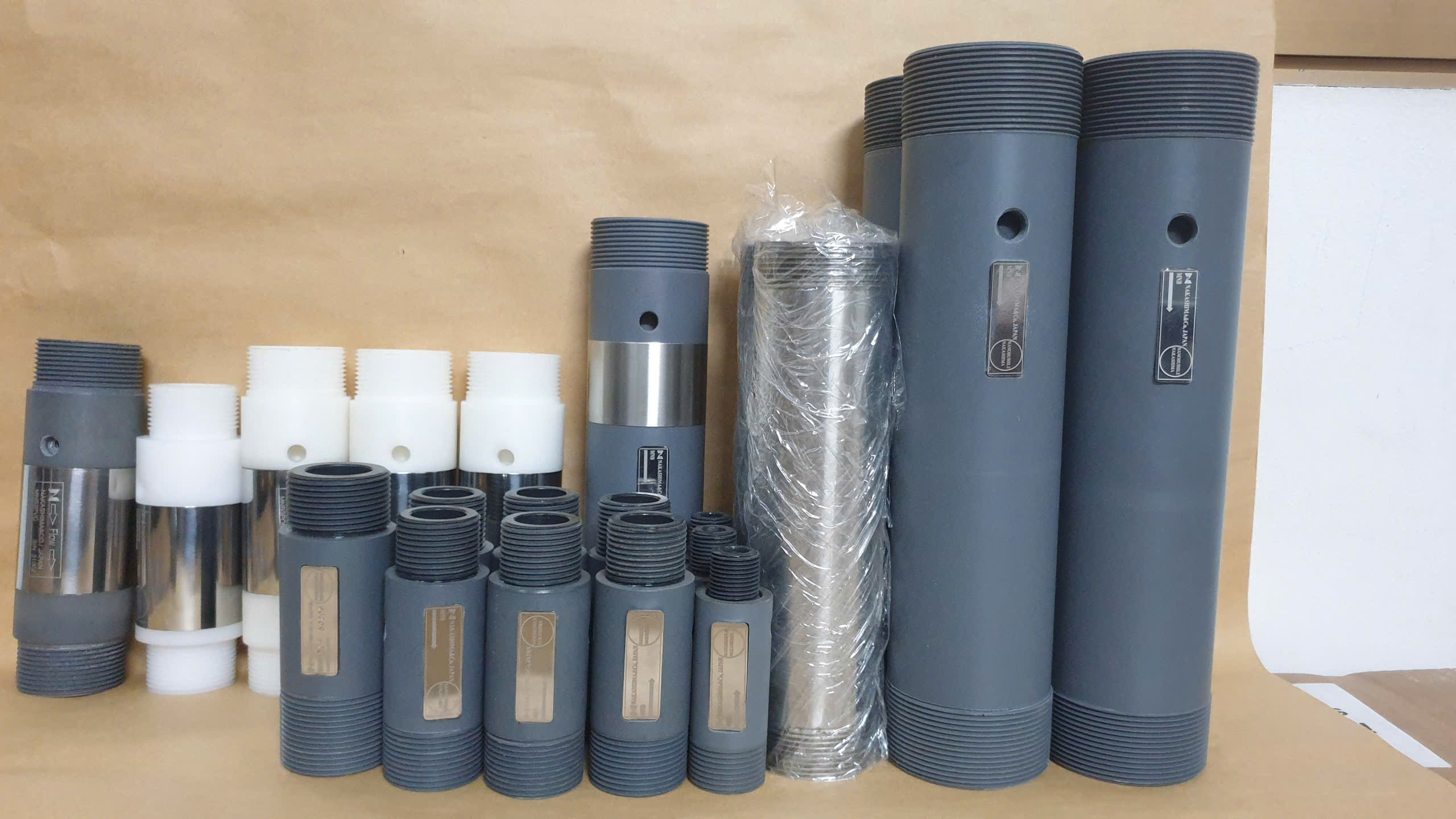
Small fine bubble nozzles (microbubble or nanobubble-generating nozzles with relatively low flow rates of gas flow rates : 0.5–10 L/min) are extremely valuable for laboratory-scale research because they allow scientists to investigate bubble behavior, water chemistry, biological responses, and engineering performance before investing in larger pilot or commercial systems. Many successful field applications of nanobubbles in aquaculture, agriculture, and water treatment begin with laboratory experiments using compact nozzles.
1. Lower research cost
Small nozzles require:
* Small circulation pumps (80–350 W)
* Small water tanks (5–200 L)
* Less oxygen or ozone consumption
* Lower electricity usage
* Smaller laboratory space
This significantly reduces the cost of repeated experiments.
2. Better experimental control
A laboratory system allows researchers to accurately control:
* Flow rate
* Pressure
* Gas type (air, oxygen, ozone, CO₂)
* Water temperature
* pH
* Salinity
* Organic loading
* Bubble generation duration
This minimizes variables and improves reproducibility.
3. Easier optimization of operating conditions
Researchers can rapidly evaluate:
* Optimum operating pressure
* Gas-to-water ratio
* Circulation rate
* Hydraulic retention time
before designing larger systems.
4. Bubble characterization
Laboratory equipment can accurately measure:
* Bubble size distribution
* Bubble concentration
* Bubble lifetime
* Zeta potential
* Gas dissolution efficiency
* Oxygen transfer rate (OTR)
* Oxygen transfer efficiency (OTE)
These measurements are much easier and less expensive than in full-scale ponds.
5. Water quality studies
Small systems are ideal for investigating effects on:
* Dissolved oxygen (DO)
* Oxidation-reduction potential (ORP)
* pH
* Turbidity
* Total suspended solids (TSS)
* Chemical oxygen demand (COD)
* Ammonia
* Nitrite
* Iron and manganese oxidation
6. Biological response studies
Laboratory trials can examine responses of:
* Fish larvae
* Shrimp postlarvae
* Biofloc microorganisms
* Nitrifying bacteria
* Microalgae
* Aquatic plants
Parameters such as survival, growth, feed conversion, stress indicators, and disease resistance can be monitored under controlled conditions.
7. Ozone safety evaluation
Because ozone is a strong oxidant, laboratory systems help determine:
* Safe ozone dosage
* Contact time
* Residual ozone
* ORP limits
* Fish toxicity thresholds
* Biofilm control efficiency
before field deployment.
8. Faster experimental cycles
Researchers can complete many replicate trials in parallel, enabling:
* Statistical analysis
* Dose-response studies
* Seasonal simulations
* Repeated testing
A laboratory experiment may take days instead of weeks required for pond-scale trials.
9. Easier visualization
Transparent laboratory tanks make it possible to observe:
* Bubble formation
* Bubble collapse
* Bubble circulation
* Flotation behavior
* Foam formation
* Particle attachment
These observations are difficult in large ponds or raceways.
10. Lower risk before scale-up
Testing at laboratory scale reduces the risk of:
* Incorrect nozzle sizing
* Oversized pumps
* Poor oxygen transfer
* Excessive ozone dosing
* High operating costs
* Fish or shrimp mortality
before investing in pilot or commercial equipment.
Relevance to aquaculture research
For aquaculture applications, small fine bubble nozzles are especially useful for screening technologies before pond-scale deployment. They enable researchers to evaluate:
* Oxygen transfer efficiency in biofloc systems.
* Performance of oxygen nanobubbles for larval fish or shrimp culture.
* Ozone nanobubble effects on pathogens such as Vibrio spp. and off-flavor compounds such as geosmin and 2-methylisoborneol (2-MIB).
* Foam fractionation and dissolved organic carbon removal when integrated with a protein skimmer.
* Impacts on nitrifying bacteria and overall biofilter performance in recirculating aquaculture systems (RAS).
Tags: